Thursday, December 16, 2021

End of Year Blog Time

 Looks like I didn't do this last year... but the year before you got a 10 year retrospective, so I'm not too worried. ;)

(Oh, looks like I did it on Twitter last year. 

https://twitter.com/Tursilion/status/1345228785629556736

Oh well, I already started this here...)

It's hard to believe it's only been a year since I settled in up here -- and it's also hard to believe it's only been a year. I actually applied for a number of jobs, and it surprised me how much I dislike interviewing. ;) I guess, in fairness, I only had three jobs in the US that whole time, two of which I knew what I was doing, and one which was so amazing I'd do anything. (Also an honorable mention that I would have taken, they were awesome but fell into the 'knew what I was doing' bit...)

Anyway, THIS year... well, applied for a handful of jobs. One was pretty exciting - they were a manufacturing robot company and I could have kept using my skills, but they declined. I felt like maybe I offended them with some of my questions about the hardware... got to remember not to question the design until AFTER hired... ;) 
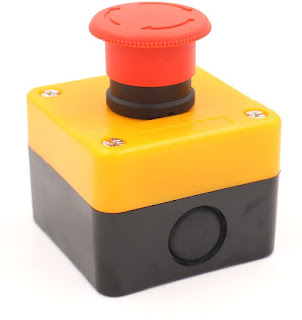
e-stop button

Amazon chased me for a while - through the year in fact. But I never ended up agreeing to the full interview process. Maybe someday. They were smart when I interviewed down south...

I ended up working on a gas detection camera instead - and that was a whole new world for me. ;) In the end, my own contribution was entirely on the Linux software side, but it was a neat little world that I completely was not aware of.
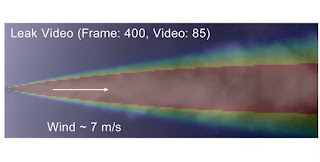
graphic of methane spray viewed in infrared
Still had a few companies try to tempt me back down south, and it was pretty close. But... nah. Open to certain other countries though...! ;)

All I can say is my taxes are going to be fascinating this year... :p

But this usually isn't about boring old work. Unfortunately, it was a really quiet year for me. The pandemic forced a lot of things to be help back, and since I took work I didn't get /any/ of the personal progress I was hoping for. 

'keep your nose to the grindstone' with old time photo

I got my car side window smashed for the first time ever. They didn't take anything, just rifled through and left it all on the seat. They stole my neighbor's car, and there's some suspicion they were looking for spare keys. Still cost me $500. I was surprised, though, I park within inches of a concrete wall, yet that's the side they smashed the window and crawled into the car on. I can't even fit there - I can't imagine how skinny the thief was.

What made it doubly annoying was only two nights earlier, they had gone through my car again. Apparently that night I left it unlocked by accident. Again, took nothing, just left it on the seat. They already knew there was nothing there, why smash my window? I was really annoyed cause I had considered putting a webcam on my car dash, but I couldn't figure out how to power it.

I sadly don't have the pictures anymore - there was nothing in them I wanted to keep.

I actually talked to Natsume about licensing Double Dragon, to try for another retro port. They were friendly but eventually declined. Doing ports legally is kind of neat but it IS hard to get people to talk to you. ;)

Got my COVID shots, of course -- ended up with 3 of them! I got AZ first, and when that was declared no good for travel, I was able to get two moderna shots to cover that. All three shots made me feel lousy for a day, yes. But now I'll never know if I actually had it when I was in Asia. ;)

I got a lovely final gift from Tokyo Disneyland - one of those laser printed 3D engravings inside a glass cube of the rose from Beauty and the Beast, with my name and thanks for helping with the attraction. I am looking forward to finally being able to fly back to Tokyo and visit the park as a guest, someday. :)

Beauty and the Beast rose in 3d crystal block from Tokyo Disneyland

I've continued working with the Second Life wrestling group, though Second Life had several bouts of the usual internet drama. We seem to have survived them, and for a little while I even refereed
a second federation, using a grump gryphon character I had created for earlier stories.
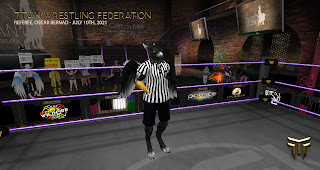
Oscar the Gryphon at Titan Wrestling

We also did a big charity event called Slam-O-Ween, part of a week long series of events on SL for Breast Cancer. I dressed my raccoon ref up as Elvira for that one. We raised 3/4s of a million "Lindens" over the entire event (about $3500 US), with our silly little animal wrestling accounting for a double-digit percentage of that.
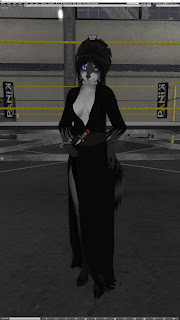
Sila the Raccoon as Elvira at Slam-O-Ween

I also ended up aging up my old TLK Muck wizard hyena pup, and now he's a wrestler too. ;) I got permission from the person who created a lot of the original lore that he ended up in, and am using it as his gimmick. ;) I'll be honest, there was a significant time investment here... but I was lucky enough to get help from a skin designer and even from a talented singer/songwriter and friend for her music.

Danur Hyena at Sunday Night Frontline

Danur - Rithandren Ranger. Danur's title for his intro video.


I did some minor updates to Classic99, and I did some minor updates to my ponyscript, some updates to my VGM player, but precious little else, honestly. I let myself get overwhelmed again - and so quickly. The ONE task on my TODO list was Classic99 V4, and I'm going to try to meet that by the end of the year by the letter of the law, if not the spirit. (That is, my goal is 'boots', not 'useful'. ;) )
Blank blue screen, all Classic99 v4 can show right now.


Oh! I did sidetrack and make a tribute to Thunder Force III on the TI - converting all the music with my VGM toolchains and creating some of the intro graphics to resemble it!
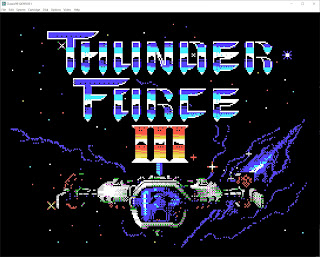
Thunder Force 3 title page rendered on the TI

I did take one trip out to Ottawa, right before Omicron became the new buzzword, and it was nice! But it felt so weird to be flying after so long. ;) I didn't take any pictures at all...

I also let Cool Herders DS leak out to an archive site, just to see if that gets a single person to play it and comment on it. (Nope. Not yet. I actually thought this version was fun... ;) ). That's over here: 

https://www.gamesthatwerent.com/2021/11/cool-herders/

And of course someone immediately posted it with invalid license terms over to Archive.org... well meaning perhaps, but bad form. Still... here's that:

https://archive.org/details/cool-herders-beta-90-percent

Plans are in place for next year to be more productive - if the new job doesn't crush me. They both promise my weekends will be fine and that the work will be super challenging. This will be interesting. ;)

So yeah, that was 2021!


Tuesday, September 7, 2021

Finally Breaking Through Is Always Nice!

I've been fighting a small problem for the last two days, and I finally just figured it out. It's such a relief to finally have it make sense that I decided to write it up before I even coded the fix, which it was still fresh. It was a small issue, but in a very large project, which made debugging difficult.

Back in the beginning of this whole pandemic I published version 2 of my VGM compression toolset, this one much more flexible and able to import many more formats. Last month someone finally used it. Yes, retro development is sure rewarding! Anyway...

This guy ported all the tunes from the NES version of Smurfs over to the TI, and released individual programs with my Quickplayer, which wraps a tune with a standalone player and lets you add some text. It was sweet, but awkward... and since he asked if anyone could make a cartridge, I wrote a tool that would take a folder full of program images, and build a loader cart with a menu.

This was a good start, but I decided that I also wanted to take all the visualizers I've done over the years (four of them), and make them available in the Quickplayer too. I adapted all of them to fit in the 8k low memory block on the TI, and ported them to Coleco as well. Then I coded a couple of flags that could be externally set that could be used to find a selection program for chaining (with random play as my intent.) It took some fiddling, but that all came together eventually.

So before diving into the issues that the random player gave me, let's recap...

First, we have the music player libraries themselves.

They are wrapped around a song in a standalone player program -- there are FIVE player programs (four with visualizers, and one just text like I originally released). Plus the program that does the actual wrapping and generates the final code.

Then we have a tool that packages these programs up, and auto-generates a loader program for them (so, the tool, and the loader program).

And we have a menu that selects which loader will be executed. So we're up to 9 programs, and then I wrote the randomizer.

I expected this part to be easy, because I had carefully compartmentalized everything. To explain a bit, the TI file system loads program files in individual 8kb chunks. In addition, the TI's memory map splits the RAM - an 8k block at 0x2000 is where I store the player, and a 24k block at 0xA000 gets the music data. So, the player was always in a separate copy block to the data.

The autogenerated code thus always looks a lot like this:

>  60B6  0200  li   R0,>6004 Ball
   60BA  0201  li   R1,>6000              
   60BE  0202  li   R2,>2000              
   60C2  0203  li   R3,>0cb4              
   60C6  06A0  bl   @>619c      (Copy data)          

   60CA  0200  li   R0,>6006    Data      
   60CE  0201  li   R1,>6000              
   60D2  0202  li   R2,>a000              
   60D6  0203  li   R3,>058a              
   60DA  06A0  bl   @>619c                

   60DE  06A0  bl   @>600c      Trampoline to start          
   60E2  2000  data >2000 Start address

There's a bit of an extra wrinkle in there. The TI cartridge memory space is only 8k, so we're also paging 8k banks. So, R0 is loaded with a page reference, R1 is a source address, R2 is a destination address, and R3 is the number of words to copy. 619C is a subroutine that banks the page in and does the copy. The first destination address is also the start address, and so it's also stored in the data at the end.

This all worked pretty well, so when I did the randomizer, I decided to have it pull the copy data for the first part, which is always the program, do the copy itself, and then randomly jump to the data copy for a different one. This would allow the music and visualizers to mix and match, so to speak.

It tended to work... sometimes. It was very random. Of course, I did introduce two random numbers. I was able to try hard coded values through the debugger and generate combinations that worked and combinations that didn't.

If you have already worked out why, damn you. You should have told me yesterday and saved me some time! ;)

If not, my next clue was that when it didn't work, it was jumping to incorrect addresses - addresses that tended to correlate with different programs than the one that appeared to be loaded in RAM. But out of all five player programs, I only used two start addresses, >2000 and >2100. So there was always a chance of it working.

A sensible fellow would have sorted it at this point, but it took me just a little longer!

I took a lot of notes about start and load addresses, observed patterns, stepped through the code, and probably the fifth time I stepped through a broken start it suddenly clicked.

This is your last chance to tell me what it was! ;)

So yeah. The program is copied in the FIRST block, and the FIRST block contains the start address. JUMPING to the data copy in the last block means that we would use the start address contained at the end there -- which may or may not be for the code we actually loaded, since we are playing mix and match.

To clarify, here's the loader for Piano:

   616E  0200  li   R0,>600e   Piano <-- no page increment 
   6172  0201  li   R1,>6b0e              
   6176  0202  li   R2,>2100              
   617A  0203  li   R3,>0883              
   617E  06A0  bl   @>619c                

   6182  0200  li   R0,>6010   Data         
   6186  0201  li   R1,>6000              
   618A  0202  li   R2,>a000              
   618E  0203  li   R3,>058a              
   6192  06A0  bl   @>619c                

   6196  06A0  bl   @>600c     Tramp      
   619A  2100  data >2100      Start address

Note the different start address!! So, if we copy the Ball program, then jump to the data copy for Piano, we'll end up starting in the middle of the Piano code!

Of course.. the "right" way to do this wouldn't be hacking around your own code... you'd store the player programs in one place, and the music in another... but I wanted to be able to work with programs anyone generated -- plus I expected it to be faster to do. ;) (It probably wasn't!)

The lesson is - beware of red herrings. Validate your assumptions. And for goodness sake, pay attention when you're doing hacky things like running your own code out of order, even if it was on purpose!

Monday, June 14, 2021

Technical Debt is...

 Every time you ignore an error message and say "I'll worry about that if I see it again", you've added technical debt.

Every time you don't check a function's error return and say "We'll add that after it's all working", you've added technical debt.

Every time a function doesn't work, and you just add a comment that says "This doesn't work" instead of investigating why, you've added technical debt.

Every time you fail to test a function at all, and don't check if it's actually working, you've added technical debt.

Saw all of this tonight... ;)

A lot of people think that technical debt is a function of long term code, of systems that have become weighted down with hacks and patches. Some people think it's a deliberate choice, and therefore you can come back around and clean it up easily enough.

But you can't. It's all lost. You've no idea when that error will pop up again, but it will probably be in front of a customer when you think everything's working. The system will malfunction on Thursdays but you completely forgot that the main interface library that you used had an error return "FAIL_ITS_THURSDAY" that you didn't add a handler for -- now you have to launch a full debug process to find what's wrong (and since you didn't start troubleshooting till Friday, it'll take you a week.) You can't figure out why the system isn't processing fractals because you forgot that the fractal generate function has a tiny little comment that says "// This doesn't work, come back to it later (mb)" - hope you can find it!

Technical debt costs twice what you paid to put it into the system in the first place. And worse, it's often passed on to someone who wasn't there for the original design, so they've never heard of the library that hates Thursdays, only ones that hate Mondays. They'll need three times as long to find the issue. The customer doesn't care that you meant to come back to investigate that error code, they only care that it didn't work. And everyone at E3 was waiting to see your cool new fractal generator, not a grey box that pulses slightly.

Why would you want to deliberately pay all that? Most of the time, the developer of these debts could have fixed them in minutes. Pay the minutes, don't get so caught up in the excitement that you pay the debts later.


Wednesday, May 26, 2021

You're Doing It Wrong - AI

 AI will definitely destroy society. But not the way you think.

Disclaimer: I'm not a machine learning expert, and I know some will disagree strongly. Get your own blog, ya smarmy bastard. ;)

AI, or more correctly in most cases Machine Learning, is increasingly being used in difficult, abstract problems to give us a yes/no answer to questions even an expert would have trouble with.

There are also, as a result, countless stories of how AFTER training, it was discovered that these machines were skewed. They examined irrelevant details to come up with the answer, or they revealed biases in the dataset (which, honestly, people should have seen long before even starting.)

So machine learning, to give a very simple and mostly wrong description, is the act of wiring up a set of inputs (say, pixels of an image) to a set of outputs (say, "cat", "dog", "martian", "amoeba") through a chain of configurable evaluators. These evaluators, which are not called that by anyone with training in the field, are analogous to neurons in your brain.

The idea is, you show the inputs a picture of a cat, and tell it "cat". The machine tries a few combinations of settings and decides which one gave it "cat" most consistently. You show it a "dog" and it does the same thing, trying to remember the settings for "cat". Repeat for "martian" and "amoeba". Then repeat the whole process a couple of million times with different pictures randomly selected from the internet. The neurons slowly hone in on a collection of settings that generally produce the right output from all on those millions of inputs.

So you're done! You fed your electronic brain five million images, and it classified them with 99% accuracy! Hooray!

Now you give it a picture of a Martian it has never seen before. "Cat", it tells you confidently.

Well... um.. okay, cats have four legs and Martians only three, but, we're only 99% perfect. How about this lovely photo of an amoeba devouring a spore?

"Cat. 99.9% certainty."

"That's not a cat," you reply. 

You offer up a beautiful painting made in memorial of a lost canine friend. "Amoeba."

Frustrated, you offer up a cheezburger meme. "Cat," the AI correctly responds.

Relieved, you sit back and accidentally send it a set of twelve stop signs and one bicycle. "Martian."

So what the heck is going on?

Well, first off, you got your 5 million photos from the internet, so it was 80% cats. Thus the AI ended up with a configuration set that favors cats. It decided that abstract blobs and unrealistic strokes, much like the brush strokes in your canine painting, looked a lot like the background of slides on which amoeba were found - it didn't learn anything about amoeba themselves. And tall, thin objects were clearly Martians, since you didn't teach it about anything else that was tall and thin.

Now, machine learning, even in the primitive form we have today, has some value. In very narrow fields it's possible to give a machine enough information that the outputs start to make sense. But the problem is that these narrow field successes have led to trying over and over to apply it to broader questions - questions which are often difficult even for human experts with far more reasoning power.

There are two big problems with machine learning. The first is that in real life, you would never actually know why it made those mistakes. The neuron training sequence is relatively opaque and there are few opportunities to debug incorrect answers. It's a big opaque box even to the people who built it.

The second is data curation. When you create such large datasets, it's very hard - nearly impossible - to ensure it's a good data set. There must be NO details that you don't want the AI to look at. If you are differentiating species, then no backgrounds, no artistic details, even different lightning can be locked in as a differentiator. The AI has NO IDEA what the real world looks like, so it doesn't unconsciously filter out details like we do. To the machine EVERY detail is critical. If I give it a cat on a red background and a dog on a blue background, it is very likely to determine that all animals on a red background are cats, because that is easier to determine than the subtle shape difference. 

The dataset must also be all-encompassing. If you leave anything out, than that anything does not exist to the AI, and so providing it that anything automatically means it must be one of the other things. The brain can not choose "never seen before"... at least with most traditional training methods. At best you might get a low confidence score.

Finally, the dataset must be appropriately balanced. There may be cases where a skew is the right answer... for instance, a walking bird in the Antarctic is more likely a penguin than an emu, but if you are classifying people then you need to make sure the dataset contains a good representation in equal proportions of everyone. Sounds pretty hard, doesn't it? Yeah, that's the whole point. It's hard.

And that's a point I've made over and over again. Computing good hard like grammar. People are always looking for shortcuts, and they never work as well as expected. Not only is machine learning being seen as a huge shortcut to hard problems, but people are taking shortcuts creating the machine, and getting poor results. This shouldn't be a surprise. If you know the dataset is incomplete, why are you surprised that the machine doesn't work right? You're supposed to be smart. ;)

The real problem of all this is that people still think if a computer says it, it must be true. This is despite the daily experience with their cell phones, smart TVs, game systems and PCs all being buggy, malfunctioning pieces of crap, somehow the big mainframes at the mega-corporations (which generally don't exist anymore and the ones you are thinking of have less power than your smart watch), somehow those machines get it right.

So as machine learning continues to be used to classify people for risk, recognize people on the street, call out people for debt, etc, people are going to be negatively impacted by the poor training the machines received.

Computers are stupid. They are stupider than the stupidest person you've ever had to work with. They are stupider than your neighbor's yappy dog down the street who barks at the snow. They are stupider than those dumb ants who walk right into the ant trap over and over again. Computers do not understand the world and have no filter for what is relevant and what is not. Don't trust them to tell you what's true.


Friday, January 29, 2021

Complexity - or - You're DEFINITELY Doing it Wrong

Hey, I'm employed again! You know what that means - MORE RANTS!

Any new position is always connected to learning about new systems that you didn't see before - or in this case - that I deliberately steered away from before. And the base takeaway of the last couple weeks is "people love complexity".

From layering systems on top of Git to creating an ecosystem with an entire glossary of new terminology, some people just feel a system isn't worth doing if it isn't layered with system on top of system on top of system. Unfortunately Linux as a platform heavily endorses this approach with a huge library of easily obtainable layers.

I once made the joke that building a project under Linux is like playing an old graphical Sierra adventure game. You need to get a magic potion to save the Princess, but the witch demands you bring her an apple. The orchard can't give you an apple unless you bring them some fertilizer for the trees. The farmer has fertilizer, and he'll trade you for a new lamp for his barn. The lamp maker would love to help, but he's all out of kerosene... and so on for the duration of the quest. Much the same under Linux, just replace the quest items with the next package you need, which depends on the next package, which depends on the next package... sometimes I wonder if anyone wrote any actual code, or if they all just call each other in an infinite loop until someone accidentally reaches Linus' original 286 kernel, which does all the actual work...

So anyway, yeah, if you need to invent a glossary of terms to describe all the new concepts you are introducing to the world of computing, then you are probably not a revolutionary - you are probably over-complicating something we've all been doing for better than half a century. Do you really need 1GB of support tools to generate an HTML page?

It's one thing I loved about embedded, it hadn't reached the point of being powerful enough to support all these layers yet. But those days are rapidly ending. The Raspberry PI Pico is a $4 embedded board powerful enough to generate digital video streams by bitbanging IO. Memory and performance isn't much of a concern anymore.

But let me end on a positive note - unusual for me, I know. Some of these packages produce amazing results and even I'm glad to see them out there. But for Pete's sake, consider whether you really need to add another layer on top of those packages - what are you actually adding? Seriously, poor Pete.

... if I could add a bit from Hitchhiker's Guide to the Galaxy...

"Address the chair!"
"It's just a rock!"
"Well, call it a chair!"
"Why not call it a rock?"